Monday, 16 April 2012

Awesome children's book!

If, like me, you're a lover of beautiful illustrations and children's books then you will go nilly when you see my new favourite called "The Secret Lives Of Princesses" by Philippe Lechermeier with illustrations by Rebecca Dautremer. All I will say is WOW-WOW-WEE-WOW! The concepts behind the various characters are priceless and super cute and will have you smiling from ear to ear at pure bliss.

The book aims at "discovering the unusual, outrageous and fascinating royal ladies" and introduces us to the fascinating world of princesses. "Everyone knows about Cinderella, Snow White, and other fairy tale favourites. But there are many princesses who have been so well hidden, most of us never heard of them....The Secret Lives of Princesses is a treasure trove of incredible behind-the-scenes stories that reveal the secret lives of the world’s most mysterious princesses. Not your typical princess story, this gorgeous collection offers a fun, sophisticated and witty alternative to ordinary tales and delights the eye with its lush, exotic art and a bold, vivid design."

Princess Anne Phibian

Princess Do-Re-Mi

Princess Oblivia

Princess Somnia


For more information visit their website!

STUNNING!


I found this image in my "inspiration folder" - which I'm sure you all keep filled with all of the stunning things you come across as you get lost within the world wide web ha ha ha! The photo is STUNNING and the dress gorgeous... now I just wish I could remember where I found it so I could give credit where it's due!

Info Graphics


I have been tasked with visually putting together some statistics (and at first I thought to myself - UUURRRRGGGGG, I really don't feel like doing this, but as with any project I started by doing some research and thought to myself: "look Lecia, if you're gonna do this just try to make it fun for yourself and make the project interesting even if it's just a really small project"

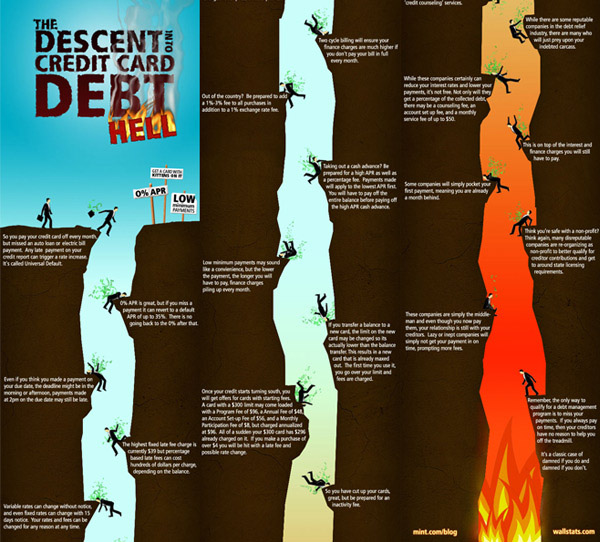
I therefore started doing a bit of digging into Info Graphics and was amazed at how much fun this could actually be! I have dealt with it way back when but I guess as with anything, a person forgets! Below are a few cool samples of what I've found on line (thanks to http://www.hongkiat.com) and I think it's given me some "oemf" to get going on mine!


One thing that has hit home again is that Info Graphics can take the boring statistic and make it interesting to the viewer allowing them to experience the information provided as apposed to just blindly processing the information in front of them!


Friday, 9 March 2012

AWESOME poster - need I say more!

http://salenacastro7.wordpress.com/2011/01/31/21/
When you first see the above cigarette you miss what's really happening within the lit, burning tip... look carefully and see the burning trees and houses! If this isn't enough to make someone think twice before at least flicking their bud out the window then I REALLY don't know!

Monday, 5 March 2012

Theory of gestalt in graphic design

Today I will be introducing my students to the theory of gestalt in graphic design! It always amazes me that as a graphic designer (working in the industry) we tend to get to the point where we do things a certain way automatically and every now and then I do enjoy going back to the books to re-evaluate what it is that we are doing as professionals. Going through gestalt again reminds me of how our human brain functions and interpret the various things we see. I find it fascinating to be honest!

So gestalt then...
This is probably the most applicable psychological theory when it comes to graphic design. We as graphic designers are most certainly not psychologists and after researching extensively I have found the best explanation on 2 fellow blog (http://jayce-o.blogspot.com/2010/12/graphic-design-and-gestalt-theory.html and http://www.designdune.com/inspiration/the-best-photos-to-illustrate-gestalt-theory/). This description is just enough to understand and apply without having the HUGE theory component added to confuse my students.

Gestalt teaches us how visual perceptions (what the eye sees) can be formed. Gestalt principles that are applied in graphic design include proximity (closeness of the position), similarity (similar form), closures (closure of), continuity (continuity of the pattern), and figure ground.

1. Proximity - Objects with a position adjacent to each other will be grouped as a whole.
You perceive this logo as one unit and not of a whole bunch of smaller parts.
 

2. Similarity - Objects forms and similar elements will be grouped as a whole.
Your brain has quickly interpreted the eagle surrounded by the sun and you moved on. However, if you spend some time trying to analyse the picture, you will soon discover that the eagle contains similar elements with the sun; this is the reason why you brain has interpret this image as a whole. This picture is the perfect illustration of the similarity principle, which happens when there are elements that look similar and the brain concentrates them into a single pattern or image. In this case, the triangular shapes are the similar elements, so you can see the eagle, the sun or the image as a whole.


3. Closure - An object will be intact even if the form is not closed entirely.
Your eye will automatically sees the shape "A" in the logo as it completes the missing parts.
 

4. Continuity - The object will be perceived as a group because of the continuity of the pattern.
As a result of continuity your brain processes what it seas to be able to read this logo.


5. Figure Ground - An object can be seen as two objects with a touch of foreground and background. Each can be identified as objects without having to form it into a solid.
Sample of Figure Ground: see the face of the baby in the negative space of the moon!